SANN News
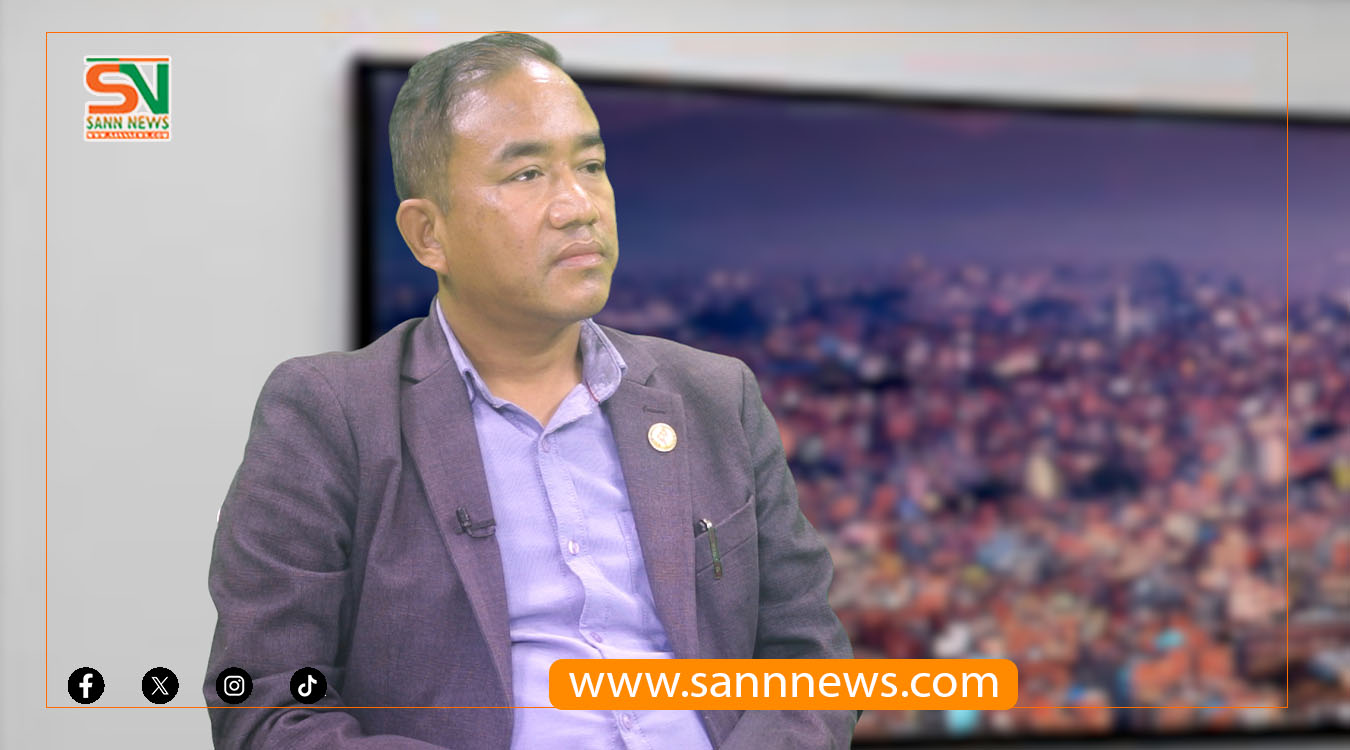
Direct candidate from Sindhuli Constituency-2 in the Falgun 2, 2082 elections. What was your experience?
I had been in Kuwait for foreign employment since 2007. My journey there had many ups and downs—both positive and challenging experiences. While in Kuwait, I did my best to support fellow Nepali brothers and sisters who were in difficult situations. Through this process, I became actively involved in social service.
I served as the General Secretary of the NRNA Kuwait from 2013 to 2015. Earlier, in 2010, we established Nepal Tamang Ghedung, where I was a founding member. Later, I also contributed as a senior advisor and central member.
In 2016 (BS 2072), when Dr. Baburam Bhattarai launched the “Naya Shakti” campaign, I joined as the founding coordinator in Kuwait. I later served as the coordinator of the International Nepali Society (INS) Kuwait and as vice-president of Pravas provinc . In last year’s Pravas provincial elections, I was elected president. After the formation of the Progressive Democratic Party, I have been serving as the President of the Presidium.
During my time in Kuwait, I worked collectively with NRNA and other organizations to support Nepalis facing hardships. During the COVID-19 pandemic, as well as during disasters like floods and landslides in Nepal, we provided financial, moral, and material assistance through INS.
What problems are Nepalis working in Kuwait facing?
The situation of Nepali workers in the Middle East specially domestic workers in Kuwait is quite complex. Although there has been a ban on sending domestic workers to Kuwait since 2008, many are still working there through informal channels.
Due to the absence of a direct government-to-government (G2G) agreement between Nepal and Kuwait, workers face serious issues related to insurance, safety, and legal protection. We have repeatedly requested the government, through the embassy, to establish such an agreement, but no progress has been made so far.
Another major issue is low wages. Many Nepali workers in Kuwait are forced to work for as little as 75 Kuwaiti dinars, whether in cleaning jobs or other labor sectors. This raises a critical question: who is responsible for creating such conditions? The government must take responsibility
The government sends youth abroad and benefits from remittances, but support seems limited when they face problems. How do you address this?
This is a very serious concern. Both students and workers going abroad face significant challenges. Students traveling to countries like Australia, the United States, the United Kingdom, Canada, and Japan often carry heavy financial burdens. Balancing work and studies becomes difficult, especially due to restrictions on working hours.
Similar issues exist in the Asia-Pacific region as well. While we are trying to address these problems by coordinating with NRNA and Nepali embassies, there is a clear need for a stronger and more effective mechanism at the government level.
What is the current situation in the Middle East? Is there really an atmosphere of war right now?
Although I am not physically there, I am in constant contact with my friends. There is definitely a sense of fear among Nepalis living in the region. People are uncertain about what might happen at any time.
Another major issue is the rising cost of airfare. Traveling to and from countries like Saudi Arabia or Kuwait has become very expensive. At the same time, rents have increased significantly compared to normal periods. This has made it especially difficult for low-income workers to return home or go back to work after visiting Nepal.
You have worked abroad for a long time and have helped many Nepalis facing difficulties there. What do you suggest the Nepali government should do for citizens living abroad?
The government needs to improve its policies first. Processes such as labor permits and passport renewals should be simplified and made more transparent. Although embassies have introduced some online services, they are still not sufficient.
Even after reaching abroad, workers should be able to easily renew passports or manage labor permits through embassies. Nepalis abroad should feel that “my government is with me.”
Unless there is a strong system where workers are sent through official government channels with guaranteed safety, these problems will continue.
Many people still seem unaware of the online systems. What should be done about this?
Yes, although there have been improvements, around 75% of people are still unaware of these online services. Because of this, they continue to rely on intermediaries.
The government and the Non-Resident Nepali Association (NRNA) should work together to spread awareness and make these systems more accessible.
What advice would you give to people who want to go abroad for work?
Before going, it is essential to understand the laws and procedures of the destination country. Learn as much as possible, including the language. Talk to people who have already worked there and learn from their experiences.
Most importantly, always go through government-recognized legal channels. Relying on agents or middlemen increases the risk of fraud and exploitation. There have even been cases of people being cheated in countries like Australia, so caution is necessary.
What should the government do to make foreign employment safer?
In my view, the government should first create an environment where people can find opportunities within Nepal. Unfortunately, around 8 million young people have migrated abroad.
Remittances contribute nearly 33% to the economy, but these funds have not been utilized effectively. There are also concerns about corruption, as seen in various scandals and incidents.
The government should minimize the need for foreign migration. If workers must go abroad, it should be through government-to-government agreements that guarantee salaries and ensure safety.
There are some positive developments now—old corruption cases are being reopened, and accountability is improving. New political forces are also playing a constructive role, which is encouraging.
Regardless of which party is in power, there should be a guaranteed minimum salary for workers abroad—enough to live decently and support their families back home. Additionally, workers should only be sent abroad after proper training and skill development.
What are the expectations of Nepalis living abroad regarding the current political changes and new parties?
Nepalis living abroad, especially the youth, have placed significant hope in the “Ghanti” (National Independent Party). Many feel that traditional political parties have failed them effectively “burning” the youth by limiting opportunities and forcing nearly 8 million young people to seek employment abroad.
As a result, there is a growing sentiment among the diaspora urging families back home to vote for new political alternatives. In some cases, this has even translated into strong messages like, “Vote for Ghanti this time, otherwise we will not send money.” This reflects both frustration with the past and a strong desire for meaningful change.
Now, people expect this new political force to create opportunities within Nepal. There is a strong demand for policies that promote self-employment, entrepreneurship, and an environment that encourages students and workers abroad to return home.
Non-Resident Nepalis (NRNs) possess valuable skills, capital, and experience. If the government introduces appropriate policies and ensures investment protection, Nepal can achieve economic prosperity. Attracting NRN investment should be a national priority.
I have also raised this issue in our party’s central committee meeting. A supportive and secure environment must be created to encourage investment from Nepalis living abroad—whether they hold permanent residency or not. The key need of the hour is to utilize their expertise and financial capacity for national development.
One major issue faced by NRNs is citizenship. To address this, the principle of “Once a Nepali, always a Nepali” should be implemented through a dual citizenship system. This would help maintain their connection to Nepal across generations.
Many Nepalis go abroad out of compulsion, not choice. This reflects weaknesses in state policy. Therefore, the government must ensure a favorable environment for investment and citizenship to reconnect not only first-generation migrants but also their children with Nepal.
What is the role of Nepali embassies and organizations abroad?
Nepali embassies are doing commendable work, but there is still room for improvement. In many countries, as many as 70 or more Nepali organizations are active. These organizations often serve as a bridge between the Nepali community and embassies, helping to identify and communicate the problems faced by Nepalis abroad.
During my time as General Secretary of the NRNA, I emphasized the importance of holding review meetings every three months. These meetings would allow organizations and embassies to jointly assess issues and find solutions more effectively.
Such coordination makes it easier to understand and respond to the challenges faced by Nepali citizens abroad.
You have helped many people during your time abroad, haven’t you?
I have always tried to help as much as I could. I believe in philanthropic politics, and I carried that belief during my time abroad as well. Many Nepalis in Kuwait are aware of my efforts.
I spent 18 years abroad. I started as a supervisor in the cleaning sector and later moved into banking and remittance services, eventually working as a Business Development Officer in a money exchange company. Due to health issues, I returned to Nepal.
After returning, I remained active in politics and social movements, including being on the frontline during the 2082 Genji Movement. Whether at home or abroad, I have consistently worked toward promoting good governance and positive political change.
Did you personally participate in the GEN Z Movement?
Yes, I was actively involved on the frontline of the GEN Z Movement. However, the movement’s environment was negatively affected by a small group of individuals—around a hundred people—who engaged in destructive activities such as stone-throwing and setting public property on fire.
While millions participated peacefully, the actions of this small group caused significant damage. Such acts are clearly wrong, and those responsible should be identified and held accountable.
At the same time, it is deeply tragic that around 76 individuals lost their lives when the government opened fire. I pay my heartfelt tribute to those who lost their lives and extend my wishes for a speedy recovery to those who were injured or disabled.
You did a lot for Nepalis even while you were in abroad and later contested the elections from Sindhuli. How was your election experience?
Initially, I had not planned to contest the elections. However, after leading an organization for 10 years in working abroad I felt a responsibility to step forward. Around Mangsir, we formed the Progressive Democratic Party, with the election symbol ‘Eye’. At the last moment, I became a candidate from Sindhuli Constituency No. 2.
During the campaign, I visited all 39 wards across four rural municipalities and one municipality in the constituency. These visits exposed me to the real challenges of Nepali society. I had the opportunity to share the struggles of millions of Nepalis working abroad with families back home—the pain of parents whose sons are away even during Dashain, and the loneliness of wives separated from their husbands for years. Having lived abroad myself, I could deeply relate to these experiences.
At the same time, I gained firsthand insight into local issues. The lack of proper irrigation has hindered agricultural growth, leaving many fields barren. In several areas, forest degradation is also becoming a serious concern. This election was special for me personally as well—I turned 43 and, for the first time since going into exile in 2007, I was able to cast my vote.
Overall, the election was like a great school for me. It gave me the chance to understand people’s emotions, expectations, and real problems closely. Winning or losing is secondary; the most important achievement is building a connection with the people.
You have worked in a developed country for a long time, returned to Nepal, and reached villages as an election candidate. How was that experience? What can be done to make Nepal prosperous?
Our main focus should be on production and employment. Nepal is rich in natural resources—water, land, and forests—but we have not utilized them effectively. For example, timber from our forests often goes to waste while we import furniture. We should establish industries that use domestic raw materials and reduce imports.
Despite being an agricultural country, Nepal imports rice and vegetables. With many young people going abroad for work, farmland is increasingly left uncultivated. Agricultural transformation is possible if the government ensures proper irrigation, timely supply of fertilizers and seeds, and a reliable market for farmers’ produce.
Corruption remains a major barrier to development. Without transparency in policymaking and reforms in bureaucracy, citizens will not feel confident in state institutions.
Finally, what decisions were made at your party’s extended meeting this week?
We have just concluded an important meeting that conducted a serious review of the elections. It was decided to hold the party’s general convention within the next three months and to strengthen the organization down to the grassroots level.