SANN News
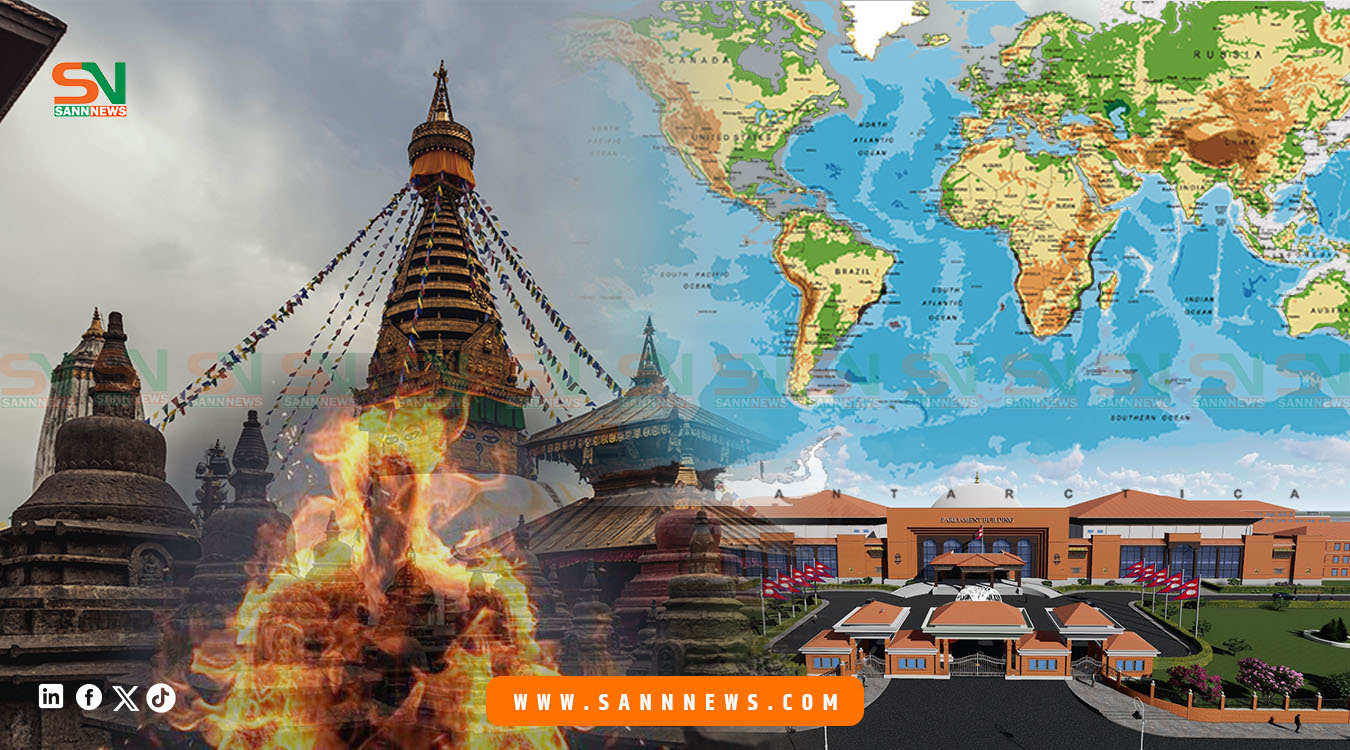
Recently, a Buddhist monk died by self-immolation. While some people have attempted to give an appearance of sacrifice to what is essentially a cowardly act of self-immolation, Buddhist followers and rights activists have raised concerns over the tendency to portray self-immolation as a “sacrifice.”
The sensational promotion of such incidents is also raising concerns about the possibility of increasing self-harm. In recent years, incidents of self-immolation and self-harm have been reported in Nepal as well as in various other countries. Questions are increasingly being raised over the tendency to portray such incidents as political resistance, religious sacrifice or “heroism.” In particular, following some self-immolation incidents abroad, the publicity carried out by religious and political organizations, memorial programs and widespread dissemination through social media have faced criticism for giving greater priority to political messages than to the value of human life.
According to a journalist who has been working in international affairs for a long time and is also a follower of Buddhism, it is unacceptable to use human life as a means of achieving any political, religious or geopolitical objective. They have stated that presenting self-immolation as a “religious sacrifice” raises questions about the fundamental teachings of Buddhism, which are based on compassion, non-violence and respect for life.
The Importance of Human Life in Buddhist Philosophy
Human life is considered extremely valuable in Buddhist philosophy. Various Buddhist texts from the Vajrayana and Mahayana traditions present human birth as something extremely difficult to attain. Human life is understood as an opportunity to free oneself from suffering through ethical conduct, meditation, wisdom and the practice of Dharma. For this reason, Buddhist traditions regard the human body as an important means of practicing Dharma.
In such a philosophical tradition, questions arise over how ending one’s own life or encouraging others to engage in such an act can be compatible with the fundamental purpose of Buddhism.
The first precept of Buddhism is related to refraining from taking life. In various Vinaya traditions, taking life and encouraging others to do so are regarded as serious ethical violations. Therefore, interpreting self-immolation as an ordinary religious practice or Buddhist practice does not appear to be consistent with the fundamental spirit of Buddhist ethics.
Can Self-Immolation Be Justified as a “Bodhisattva Sacrifice”?
Buddhist literature contains stories in which Bodhisattvas have offered even their own bodies for the benefit of other beings. On this basis, some people have linked extreme self-sacrifice with religious sacrifice.
However, according to scholars of Buddhist philosophy, such narratives cannot be understood in the same way as self-immolation carried out by ordinary individuals under political anger, despair or external pressure. Such stories of Bodhisattvas are presented as spiritual ideals associated with compassion, selflessness, wisdom and the transcendence of ego.
Using such narratives as a means of fulfilling political demands or as a form of protest is a different matter. Therefore, the use of narratives such as “self-immolation for religion” or “Bodhisattva sacrifice” raises serious questions about whether attempts are being made to provide religious legitimacy to self-harm.
A serious intellectual debate is therefore necessary over this issue.
Is There a Political Interest Behind Self-Immolation?
There have also been allegations that religious sentiments are being used for political purposes in connection with some incidents of self-immolation. Critics allege that some political and religious groups based abroad have linked the deep religious faith of young monks and followers with political campaigns.
They claim that demonstrations, memorial programs and international publicity organized following self-immolation incidents have turned such events into means of creating political pressure.
However, serious allegations of this nature require independent evidence, official positions from the organizations concerned and credible investigation. It would also be inappropriate to hold an entire religious community or organization responsible based on the self-immolation of an individual.
Nevertheless, the tendency to turn self-immolation into political propaganda requires public debate.
How Dangerous Is It to Portray Death as “Heroism”?
The way incidents of suicide or self-harm are presented in the media and on social media is also a sensitive issue. Studies in psychology and communication have examined the possibility that sensationalized and glorified reporting of suicide may increase the risk among vulnerable individuals, a phenomenon associated with the “Werther Effect.”
In such circumstances, portraying a person who commits self-immolation as a “hero,” “martyr” or “brave” can be risky. Particularly on social media, videos of incidents, live broadcasts, threats and provocative content can spread rapidly and have a much wider impact.
Therefore, when reporting such incidents, the journalism sector should give priority to the value of human life, the impact on the family and suicide prevention rather than sensationalizing the incident.
Social Media Is Adding a New Challenge
In the digital age, the influence of political and religious campaigns can reach audiences around the world within moments through social media. The situation becomes even more complicated when threats of self-harm or related content are broadcast live.
Turning an individual’s extreme suffering into political or social “content” can cause further injustice to the affected person and their family. Repeatedly broadcasting images or threats related to self-immolation may not only reduce sensitivity among viewers but may also increase the possibility of imitation among individuals at risk, according to experts.
Experts have also warned that this could increase violence and create disorder in society.
The Loss Is Greater Than the Political Gain
Whether self-immolation has achieved or failed to achieve a particular political demand is a separate matter. But once a life is lost, the damage is irreversible. The death of one person creates long-term economic, social and emotional crises within a family. Parents, spouses, children and relatives may have to carry the pain for a long time.
Political movements should seek long-term achievements through dialogue, organization, education, public awareness and institutional struggle. However, the question of how sustainable political influence achieved by ending human life can be remains a serious one.
Do Not Allow Religion to Become a Political Weapon
Religion should serve as a means of guiding people toward compassion, restraint, morality and self-discipline. However, when religious faith is used for political purposes, it weakens the fundamental spirit of religion itself.
The core teachings of the Buddhist tradition are based on compassion and non-violence. Therefore, the tendency to present self-immolation as a religious duty or great sacrifice for any political or geopolitical objective raises questions about the ethical foundation of Buddhism.
There is now a need to prevent religion from becoming a political tool, connect young people with critical awareness and education, and seek dialogue and peaceful forms of resistance instead of extreme self-harm.
Protecting Life Must Be the First Responsibility
No idea, religion, political objective or geopolitical interest can be more important than human life.
Instead of glorifying self-immolation, it is necessary to identify the social, political, economic and psychological factors behind such acts. Serious initiatives are also needed to provide psychosocial support to people at risk, make the media more responsible, and ensure sensitive management of self-harm-related content on social media.
If the core values of compassion and non-violence in Buddhism are taken as the foundation, the true strength of religion lies not in ending life, but in protecting life, reducing suffering and leading society toward peace. Political struggles have their own means, and religious faith has its own values. But respect for human life must remain at the center of both.
Faith should be a light of life, but the human body must not be allowed to become a political fire.**