Kathmandu, Sept 23: Prime Minister Balendra Shah, who assumed leadership of the country amid an entirely new political situation and context, is participating in the 81st United Nations General Assembly for the first time. With the formation of the new government, Nepal has an opportunity to present to the world not only its changed political circumstances but also its national priorities: accelerating development, reducing poverty, narrowing social and economic inequalities, ensuring gender equality and inclusive development, and improving the quality of life of its citizens. At the same time, Nepal has an opportunity to present its concerns to the international community in a factual and forceful manner regarding the unimaginable loss of lives and physical damage caused by the Bhotekoshi floods, the growing risks Nepal faces as a result of climate change, and its call for climate justice. For the new government formed amid the changed political environment following the Gen Z movement and rising public expectations, the UN General Assembly has become an important platform to present its priorities to the international community. Prime Minister Shah will address the General Assembly and is also scheduled to meet with UN Secretary-General António Guterres. His first address to the General Assembly and direct meeting with the Secretary-General are important opportunities to present Nepal’s current political situation, national priorities and international concerns on the global stage. Following the political changes of last year and as the country enters a new phase, public expectations for good governance, transparency, corruption control, effective public service delivery and accountable government have increased. At the same time, accelerating economic development, creating employment, reducing poverty, expanding access to education and healthcare, and ensuring equal access to opportunities provided by the state are equally important challenges. Ensuring that the benefits of development reach all citizens amid Nepal’s geographical, economic and social diversity is a fundamental requirement for building a new Nepal. The government led by Prime Minister Shah has made this its central objective. For Nepal, development does not simply mean increasing the rate of economic growth. Social justice, equal opportunities, gender equality, inclusion and the assurance of a dignified life are equally integral to development. Ensuring equal opportunities for women, Dalits, indigenous nationalities, Madhesis, people from disadvantaged regions and economically vulnerable communities to participate in the mainstream of development is a long-term responsibility of the state. Therefore, when Nepal presents its development needs on the global forum, it must give equal emphasis to human development, equality and social justice alongside infrastructure and investment. Nepal has long recognised the need for international cooperation to advance its national development priorities. Capital, technology, skills, knowledge and access to markets are essential for development. For a developing and landlocked country like Nepal, the importance of international partnership is even greater. Cooperation with the international community can provide an important foundation for achieving the Sustainable Development Goals, creating employment opportunities, expanding infrastructure and accelerating poverty reduction. Climate change has added another layer of challenge to this development journey. Although Nepal’s contribution to global greenhouse gas emissions is extremely low, the country is experiencing serious impacts of climate change. Rising temperatures in the Himalayan region, changes in glaciers and glacial lakes, erratic rainfall, floods, landslides and other climate-induced disasters are directly affecting people’s lives and development infrastructure. The recent Bhotekoshi floods are a serious example of this growing vulnerability. The Bhotekoshi floods caused huge loss of life and property, as well as unimaginable damage to homes, roads, bridges, hydropower projects and other critical infrastructure. Following the disaster, the challenges now include not only rescue, relief and search operations but also the resettlement of affected citizens and reconstruction of damaged infrastructure. The disaster has also highlighted the need for Nepal to present more clearly to the international community the risks created by climate change and the resources and technologies required to address them. The fundamental basis of Nepal’s concern for climate justice is the fact that its contribution to climate change is minimal while its impacts are comparatively severe. In raising the issue of climate justice, Nepal has consistently brought into the international debate the disparity between responsibility, capacity and impact. Nepal has maintained that the needs of developing and vulnerable countries must be addressed in areas such as climate adaptation, loss and damage, climate finance, technology transfer and capacity building. This year’s UN General Assembly is also important for Nepal from the perspective of climate diplomacy. Prime Minister Shah is expected to present Nepal’s position strongly and draw the attention of the international community to these concerns. Although climate change will not itself be the subject of the General Assembly debate, the 31st UN Climate Change Conference, COP31, will be held in Antalya, Türkiye, from November 9 to 20. Therefore, presenting Nepal’s climate concerns in New York will also provide an opportunity to build the groundwork for the climate conference in Antalya. All Nepalis have expected that Prime Minister Shah will utilize this opportunity. At COP31, Nepal will need to advance the issue of climate justice more clearly and convincingly. If Nepal can present to the international community the climate-induced damage it is currently experiencing, the increasing risks in the Himalayan region, the need for post-disaster reconstruction and the need for climate finance, this can provide a foundation for Nepal’s position in the forthcoming climate negotiations. Nepal’s central message from New York to Antalya should be clear: as a country that has contributed minimally to climate change but is experiencing its disproportionate impacts, Nepal needs fair and adequate international support. In the run-up to Prime Minister Shah’s address to the General Assembly, Foreign Minister Shishir Khanal’s active diplomatic engagement in New York has provided an additional avenue for advancing Nepal’s concerns. According to the Ministry of Foreign Affairs, he is scheduled to participate in ministerial-level meetings involving least developed countries, landlocked developing countries, the Non-Aligned Movement, and the Group of 77 and China. He is also holding bilateral meetings with his counterparts and other senior officials from various countries. During a meeting with the Japanese Foreign Minister in New York, the Japanese side expressed condolences over the loss of lives and property caused by the Bhotekoshi floods, and discussions were held on Japan’s support and cooperation with Nepal. Earlier, Foreign Minister Khanal had briefed diplomatic representatives and representatives of international organisations about the Bhotekoshi floods and made clear that Nepal needed international assistance for search, rescue, relief and reconstruction. The Foreign Minister’s active engagement provides a diplomatic foundation for further strengthening Prime Minister Shah’s address to the General Assembly. While the Prime Minister will present Nepal’s broader national perspective from the global stage, the Foreign Minister is working through bilateral and multilateral contacts to communicate these national concerns to relevant countries and partners. In this way, Nepal has an opportunity at this year’s General Assembly to advance a common national objective at different diplomatic levels. For Nepal, the significance of participation in the General Assembly is not limited to presenting its views. It is equally important to ensure that the international community understands those concerns, that a basis is created for necessary assistance and cooperation, and that Nepal’s national priorities are connected with international partnerships. Nepal requires long-term partnerships in areas including post-disaster reconstruction, climate adaptation, poverty reduction, employment generation, infrastructure development and human development. The world is moving forward amid multidimensional challenges. Conflicts in different regions, geopolitical tensions, economic uncertainty and the climate crisis are making international cooperation increasingly difficult. Yet these very challenges make multilateral cooperation even more necessary. For a country like Nepal, the UN General Assembly is an important platform for connecting its national needs with global challenges. Nepal has consistently expressed its commitment to peace, coexistence, sovereign equality, respect for international law and multilateral cooperation. Even amid the country’s changed political circumstances, these fundamental principles can be presented alongside Nepal’s immediate and long-term national priorities on the global stage. For the new government, this is also an opportunity to inform the international community about its policies and priorities. The resolve to build a new Nepal is ultimately linked to tangible improvements in the lives of the Nepalis. Good governance, employment, education, healthcare, infrastructure, equal opportunities and social security are among the direct expectations of the people. Fulfilling these expectations requires not only domestic efforts but also international cooperation. Therefore, Nepal’s voice on the global stage should remain firmly connected to national needs and public aspirations. In this sense, Prime Minister Shah’s first participation in the UN General Assembly is more than a formal diplomatic visit. It is an opportunity to present the priorities of the new government amid a changed political situation, communicate Nepal’s development needs to the international community, seek support for reconstruction following the Bhotekoshi floods, and strengthen the issue of climate justice in international discussions. It will be even more important to maintain the momentum of Nepal’s voice from New York to COP31 in Antalya. If continuity can be maintained between Nepal’s climate concerns presented at the General Assembly, Foreign Minister Khanal’s diplomatic engagement and Nepal’s position at the forthcoming climate conference, the voices of communities most affected by climate change can be communicated more clearly at the international level. Nepal should use this opportunity to connect its national resolve to build a new Nepal with development, equality, social justice and climate justice, and to link that vision with its long-term national interests.
Prime Minister Shah at the United Nations with Resolve to Build New Nepal
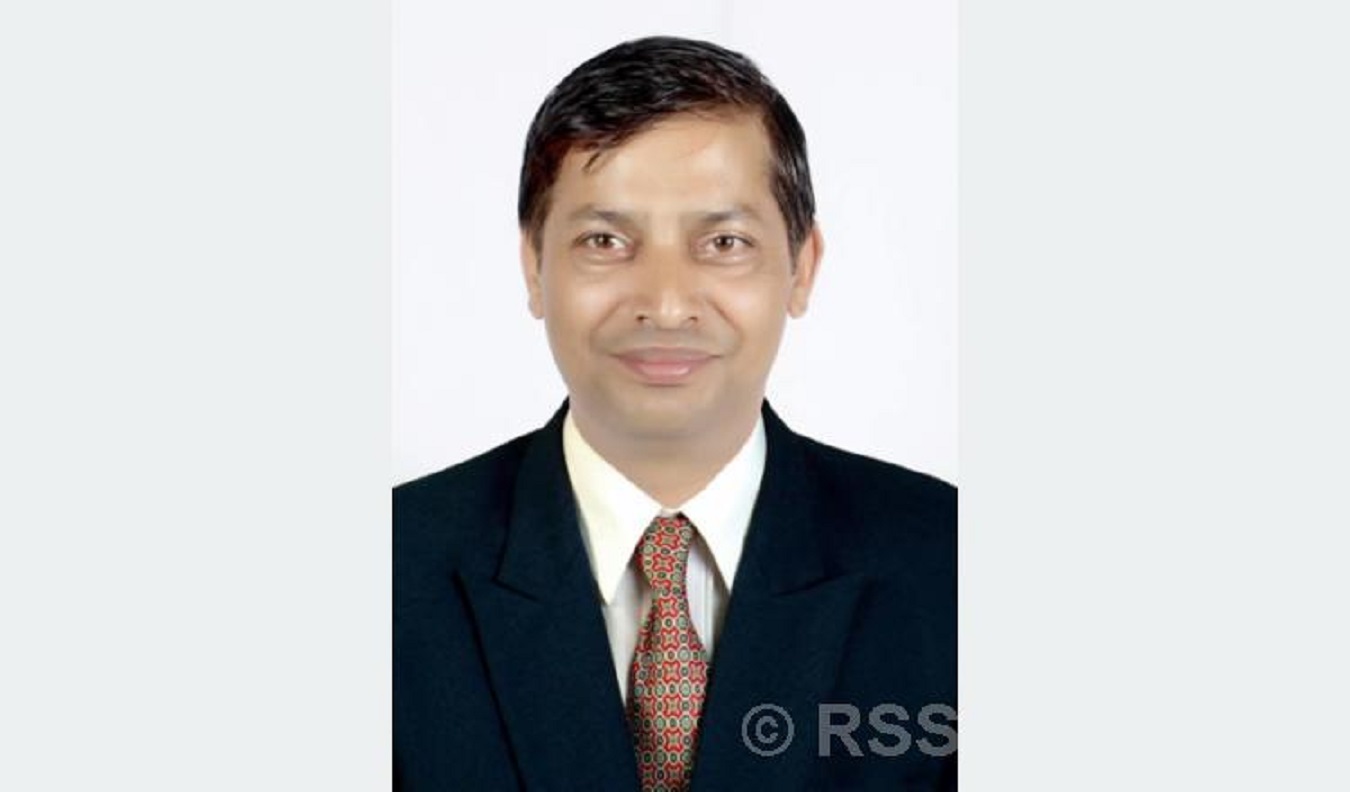
 Sharachchandra Bhandary / RSS
28
shares