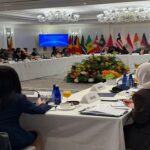
Kathmandu, Sept 23: Foreign Minister Shishir Khanal has stressed on the need for countries of the Global South to move from the role of ‘following rules’ to ‘making rules’ by effectively participating in global decision-making processes. Addressing the high-level ministerial meeting of like-minded countries of the Global South and friendly nations organized on September 22 in New York by India’s External Affairs Minister Dr. S. Jaishankar, in the context of the high-level week of the 81st UN General Assembly, Minister Khanal emphasized the need to make the collective voice of developing countries more effective in the global governance system. “‘Empowerment’ means transforming from a position of the Global South merely following rules to one where it can devise the rules. We should not just be limited to implementing agendas made by others; we need to take an active role in rule-making, running institutions, and policy-making that shapes our future,” he said. Stating that Nepal has, as an active member of the G-77, China, and the Non-Aligned Movement, consistently believed in the solidarity of the developing world, he said the concept of the Eastern philosophy ‘Vasudhaiva Kutumbakam’ reflects the shared future of humanity. He said, “Global prosperity cannot be sustainable when half of humanity is marginalized in decision-making.” Minister Khanal emphasized that the global governance system needs to be democratized immediately, his secretariat stated. “There is a need for extensive reforms in the structure of the United Nations Security Council and international financial institutions. These structures should be restructured not based on the power dynamics of 1945, but to reflect the realities of today’s world,” he said. Pointed out that developing countries, while carrying the burden of unequal debt, need to mobilize financial resources necessary for sustainable development, he emphasized the need for fair and inclusive access to the financial system. He also stressed the need to protect an open, fair, and rules-based multilateral trading system centered on the World Trade Organization (WTO). “For developing and graduating countries, predictable market access, meaningful special and preferential treatment, trade support, and integration into regional value chains are essential foundations,” Foreign Minister Khanal said. He mentioned that Nepal has been continuously supporting the United Nations as the main foundation of international law and sovereign equality, and that the ‘UN-80’ initiative should be seen as an important effort to reduce institutional division. “Institutional reforms should not weaken the pillars of development and climate; rather, they should decisively strengthen them,” he clarified. Noting that the deepest impact of divisions seen in multilateralism has been felt by weak and vulnerable countries, Minister Khanal said we should promote dialogue, technology sharing, and South-South cooperation instead of pressure based on power politics. “Empowering the Global South means revitalizing multilateralism. With courage, shared determination, and an authentic collective voice, let us move forward shoulder to shoulder to build a just and bright future for everyone,” Foreign Affairs Minister Khanal reiterated. —
Global South should move from being ‘rule followers’ to ‘rule makers’: Foreign Minister Khanal
 SANN News
14
shares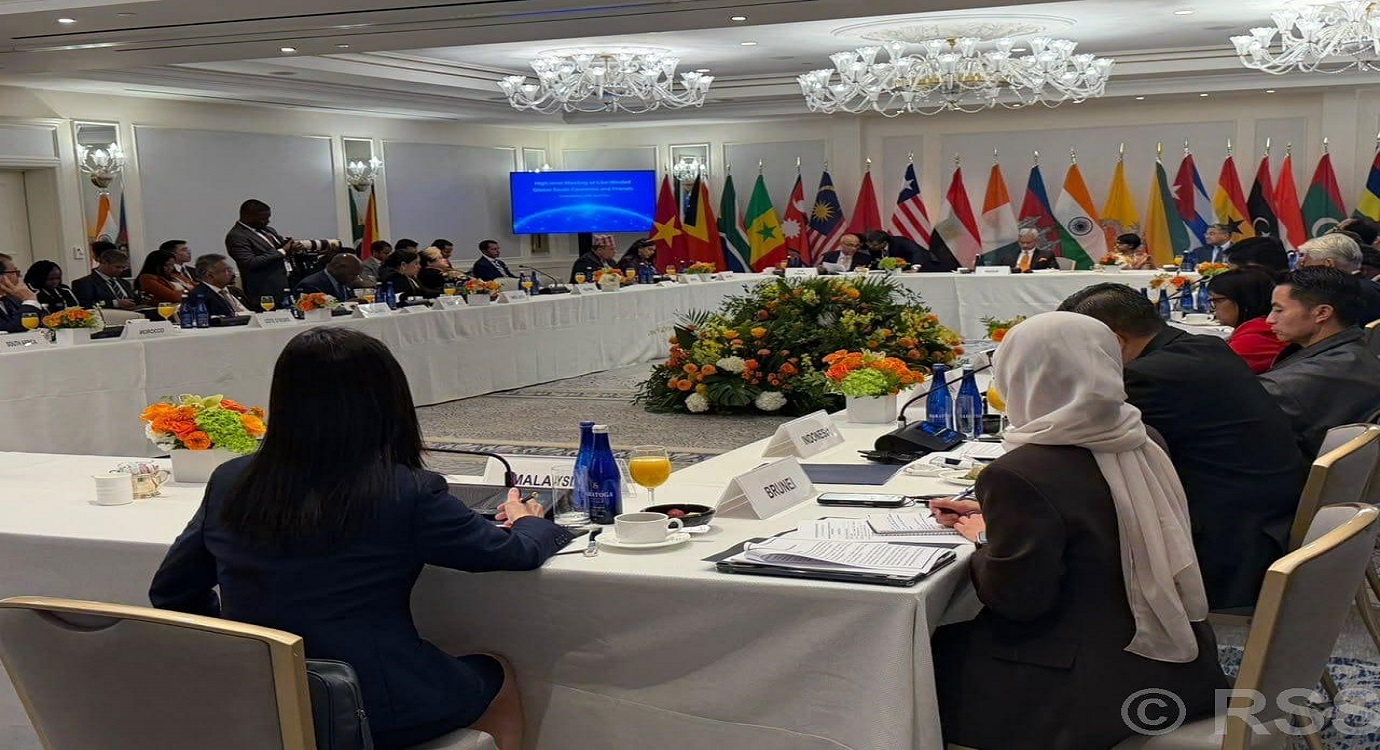
Rastriya Samachar Samiti (RSS)